Unknown Memoirs of Exarch Stefan I of Bulgaria: Between Personal Memory and Historical Mission
Rusalena Pendzhekova-Hristeva,
Georgi Mandev,
Iliana Jekova
University of Plovdiv “Paisii Hilendarski”
https://doi.org/10.53656/his2025-6-1-rus
Abstract. The article presents and examines, from a source-critical perspective, newly discovered memoirs of Exarch Stefan I of Bulgaria (1878 – 1957), entitled “Brief Memories and Impressions from Visits to Certain Countries in Northern Europe”. The text combines autobiographical accounts, spiritual reflections, and diplomatic observations derived from travels and missions in various European countries. The personal narrative intertwines the author’s life story with key social and ecclesiastical transformations in Bulgaria during the first half of the 20th century. Particular attention is devoted to impressions from Finland, Sweden, Denmark, Norway, the Netherlands, Belgium, the United Kingdom, and Switzerland, presented as examples of established democratic culture, social justice, and religious morality. Through comparative analysis, the cleric contrasts the “civilized North” with the “Balkan chaos,” formulating value-based guidelines for societal and spiritual renewal. The memoirs stand out for their multi-layered structure, combining documentary accuracy, cultural-historical perspective, and philosophical depth, offering an original insight into Bulgaria’s international ecclesiastical and cultural interactions during the period under review.
Keywords: Exarch Stefan I of Bulgaria; memoirs; history of the Bulgarian Orthodox Church; church diplomacy; Northern Europe; ecumenical movement
The Postmortal Perception of the Bulgarian Parish Clergy in European Turkey according to the Obituaries in the Exarchate Newspaper “Novini” / “Vesti” / “Glas” (1890 – 1912)
Stanislava Stoytcheva
Institute for Historical Studies - Bulgarian Academy of Sciences
https://doi.org/10.53656/his2025-6-2-pos
Abstract. The study is dedicated to the obituaries of the Bulgarian parish clergy from European Turkey (Macedonia and Adrianople Thrace), published in the Exarchate newspaper Novini (Vesti / Glas) during the period 1890 – 1912. These documents are virtually unknown in scholarly literature and are brought together here for the first time in a special compilation. A total of 57 obituaries published in the newspaper have been identified, referring to parish priests, deacons, municipal chairmen, and archpriest’s vicars. Among the deceased, urban priests predominate, while the share of individuals holding administrative positions is relatively small. Most of the obituaries were submitted privately by the family of the deceased, whereas Bulgarian institutions and professional organizations were only rarely involved in the funeral or the death announcement. The study outlines the main features of these documents that shape the posthumous reputation of the Bulgarian priest as a national activist and spiritual shepherd-namely, the personal characterization of the deceased and the description of the ceremonial aspects of the funeral.
Keywords: Bulgarian Exarchate, European Turkey, parish priests, obituaries, periodical press
Elite Responsibility for The Development of the Ukrainian State: A Historical Perspective in The Context of the Russian-Ukrainian War
Oleksandr Nazarchuk
Taras Shevchenko Kyiv National University (Ukraine)
Svitlana Hanaba
Bohdan Khmelnytskyi National Academy of the State Border Guard Service of Ukraine (Ukraine)
Oleg Batrymenko
Taras Shevchenko Kyiv National University (Ukraine)
https://doi.org/10.53656/his2025-6-3-eli
Abstract. Solving the problems of state-building and territorial unity of the country, reviving and awakening the spirit of the Ukrainian community, are of great practical importance and demand in the realities of the Russian-Ukrainian war. Responsibility is defined as a constructive form of attitude to a problem that requires a solution. As an internally oriented quality, this phenomenon reflects the tendency or even the desire of a person (or a social group, the state) to adhere to generally accepted socio-cultural norms in their activities, to follow certain rules, and to show readiness to take responsibility for their own actions. Increasing the level of the elite’s responsibility is one of the most effective ways to address many social problems in various spheres of public life. It is about the ability to feel social involvement and responsibility to society, the state and future generations, to overcome indifference and alienation from social and political processes. Responsibility is based on social interest. The elite, motivated primarily by social interest, is able to bear responsibility to society, community, and the individual. Its characteristic is not only a certain social status, but also an appropriate intellectual and psychological level of development and the ability to act in accordance with the national interest. Obviously, the active and responsible activity of the elite is its image characteristic and should be aimed at preserving and building the statehood, especially in the context of such a complex social crisis as a war.
Keywords: elite, responsibility, war, social crisis, statehood, consolidation
Bulgarian Migrant Communities in the Netherlands – Mobility and Social Dynamics
Petya Vasileva-Grueva
Sofia University
https://doi.org/10.53656/his2025-6-4-bul
Abstract. The article aims to present a current picture of the Bulgarian diaspora in the Kingdom of the Netherlands. The number, ethnic composition and economic motives of Bulgarian citizens who have chosen the country for temporary or permanent residence are examined. Attention is also paid to the models of integration, the creation of community spaces, educational and cultural institutions that maintain the national identity of the diaspora. Bulgarian citizens in the Netherlands are a representative model of society in Bulgaria, with the main difference that abroad, this society actively builds a positive environment for its social and cultural cohesion in a spirit of partnership and equality.
Keywords: Bulgarian diaspora, migrant communities, social dynamics, schools abroad, cultural institution, Bulgarian folklore and tradition
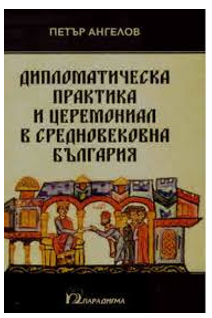
Contribution to the Research of Medieval Bulgarian Diplomacy
Kiril Gospodinov
Sofia University
https://doi.org/10.53656/his2025-6-5-pri
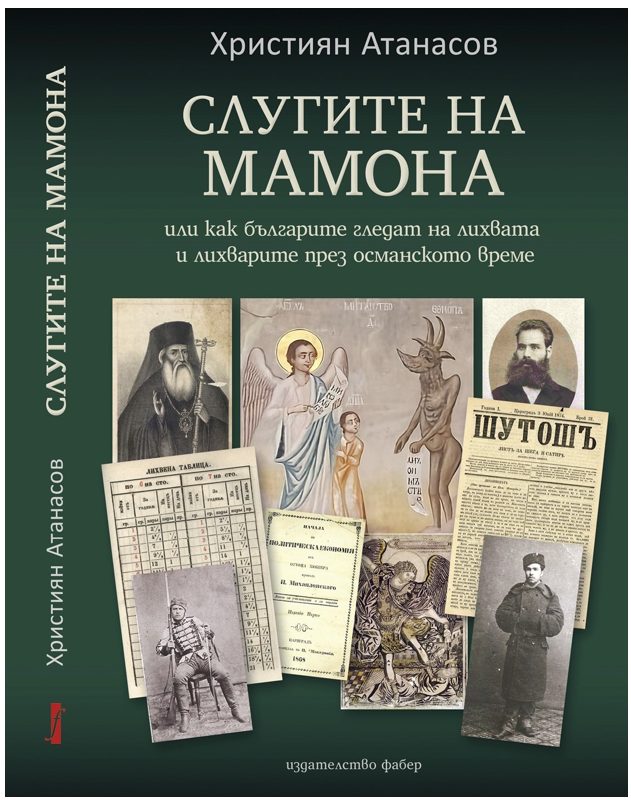
Of Interest and People. Reflections on a Study of How Bulgarians before the Liberation Viewed Interest
Pencho D. Penchev
University of National and World Economy
https://doi.org/10.53656/his2025-6-6-ann