
Tetiana Franchuk,
Svitlana Myronova,
Iryna Yashchyshyna,
Lesia Ruda,
Igor Boіko
Kamianets-Podilskyi Ivan Ohiienko National University (Ukraine)
https://doi.org/10.53656/ped2026-4.02
Abstract. The article presents the results of research addressing the theoretical and practical aspects of current integration processes in the field of higher education, with a focus on enhancing its practice-oriented nature. The aim of the study is to develop and scientifically substantiate an original model for the establishment and functioning of a hub/school aimed at fostering students’ research and project competencies. This model integrates the capacities of formal/institutional, non-formal, and informal education, within the framework of which an individual research trajectory of a future professional is programming. The methodological foundations related to the creation of student research-oriented associations have been interpreted. These associations possess the potential to foster research competencies and to serve as a basis for the development of modern innovative products (projects, startups). The research methodology is grounded оn approaches aimed at shaping a holistic educational and research environment, ensuring the learner-centered nature of the educational process, and fostering subject-subject interactions among its participants.As a result, an original model of a student hub in the format of a „School of Research, Project, and Startup Development“ has been presented and substantiated. The model is developed on a valid theoretical foundation and includes appropriate content-methodical support as well as diagnostic tools. The pilot implementation of the proposed model demonstrated the effectiveness of the suggested approach and allowed for an analysis of the obtained results, highlighting successful cases/practices as well as identifying issues that require further attention.The developed model is adaptive and can be successfully applied in other educational systems, provided their specific features and the level of development of research and project competencies among its participants (students, instructors) are taken into account.
Keywords: research; project; startup; hub; school; competence
Formulation of the problem
Leading European trends in the development of modern higher education are directly linked to the intensification of the research component within the educational process. This is driven by the following factors: 1. an emphasis on the achievement of professional competencies, understood as the ability of future specialists to solve problems in constantly changing contexts; 2. the implementation of the educational process in accordance with an individual learning trajectory, which is developed and realized exclusively on a research basis, ensures the personalization of the educational program in the process of meeting academic standards, while fully considering the learner’s individual characteristics and developmental potential; 3. the preparation of future professionals for innovative activity, particularly the development of projects and startups within their respective fields.
Research and project competencies are closely correlated with the International Competence Frameworks, in particular: P21 (Partnership for 21st Century Learning); UNESCO ICT Competency Framework for Teachers; EntreComp (The Entrepreneurship Competence Framework, EU); OECD Future of Education and Skills 2030; Ukrainian educational standards, in particular the State Standard of Basic Secondary Education, New Ukrainian School. According to these standards, the research component (critical thinking, analytical skills, creativity, ability to design, cooperation, business communication, etc.) is particularly relevant.
Thus, the need to develop students’ project-based and research abilities is closely connected to the formation of a competent research-oriented specialist who is competitive in the labor market and prepared for high-quality professional activity and the innovative advancement of their professional field.
In addition, the principle of differentiation in the development of any level of the educational system implies the identification of talented youth and the provision of additional opportunities for their self-realization. This is particularly relevant to research activities, as well as to innovation, through engagement in modern forms of project and startup development.
The core issue lies in transforming the episodic use of research tasks and various forms of project-based activities into a systematic approach that serves as a foundation for the purposeful, step-by-step development of students’ research and project competencies, preparing them for the creation of innovative and competitive products demanded by the modern innovation market. In this context, a particularly relevant approach is one that envisions the creation of localized systems within the unified educational space of a university. These systems should have a clearly defined focus and be integrated into the larger educational macro-system. Examples of such localized systems include research associations, research hubs, startup schools, and similar initiatives, which are increasingly gaining traction.
Accordingly, it was important to develop a model of a systematic approach to fostering students’ research skills and engaging them in a staged process of preparing innovations (projects, startups, competitive scientific works, etc.) and testing them in practice through various types of academic competitions.
Theoretical analysis of the problem
A review of the literature was conducted concerning the following issues: a) the theoretical foundations and practical experiences related to strengthening research and project-based activities within the structure of future professionals’ training; b) the functioning and development of associations within institutions of higher education whose primary role is to create additional opportunities for the development of students’ research and project competencies; c) contemporary educational practices aimed at fostering students’ readiness for research, developing projects, and startup activities, including the development of projects and star-ups for participation in various youth competitions.
Particular attention was given to research-oriented student associations and various forms of non-formal and informal education aimed at the systematic development of research and entrepreneurial thinking, as well as the integration of innovative practices into the educational process within the system of professional formation of the research-oriented specialist.
Conceptual positions regarding the development of students’ capacity for innovation and entrepreneurship in the context of higher education modernization were analyzed, with particular attention to the challenges of integrating project-based and startup education into the academic process (Yevtushenko, 2023; Horokhivska & Demchuk, 2023; Kalashnikova, 2023; Healey, 2005; Bulvinska, 2019; Radkevych, 2020). This served as a foundation for constructing the theoretical concept of students’ project-based research competence development.
The study was grounded in the fundamental positions of scholars advocating for the renewal of the modern system of professional education in accordance with educational standards that provide the basis for the development of students’ research and project activities. For instance, in the monograph by V. M. Anishchenko et al., it is stated that “The activities of vocational education institutions at the present stage are aimed at implementing innovative processes in the field of professional education, based on systemic, integrative, activity-based, technological, and personality-developing approaches” (Anishchenko et al., 2019, p. 43).
In the context of developing a concept for integrating project-based and research technologies into the educational process, particular value was found in studies addressing the methodology and organization of active project activity in education, as well as the specific conditions required to ensure its effectiveness in the teaching of various academic disciplines. Researchers define a project as “a set of purposeful, change-oriented, time-sequenced, one-time, and complex actions (measures or tasks) aimed at achieving a final result under conditions of limited resources and predetermined start and end dates” (Radkevych, 2020, p. 12).
This interpretation of a project as a system, a set of interrelated actions – served as the basis for projecting an educational environment conducive to the implementation of these formats of activity.
The practical component of the study was based on the analysis and interpretation of various models presented in the literature concerning the integration of scientific research into the educational process of higher education institutions (Yevtushenko, 2023; Kasych & Dzhura, 2019; Radkevych et al., 2020; Anashchenko 2019). Particular emphasis was placed on justifying the necessity of programming an individual educational trajectory by combining the opportunities of formal, non-formal, and informal education (Bulvinska, 2019; Healey, 2005, p. 77; Zhelyazkova-Teya, 2023).
Researchers conclude that it is essential to seek flexible and diverse approaches to organizing learner-centered educational activities throughout life, including through the use of non-formal education. As noted by Zhelyazkova-Teya (Zhelyazkova-Teya, 2023), „…the new person-centred goals in education focus the individual’s efforts around lifestyle, flexible individual learning paths and the role of informal education in developing knowledge, skills and competences that can be recognised, validated or accredited for the purposes of vocational qualification and inclusion in the labor market“ (Zhelyazkova-Teya, 2023, р. 29)
In order to develop an effective model for the advancement of students’ research, project, and startup activities as a system (a “school”), a comprehensive set of informational materials was analyzed. These materials focused on the potential for enhancing the project-based and research-related competencies of university instructors capable of organizing such activities (Horokhivska & Demchuk, 2023; Kalashnikova, 2023).
In particular, innovative trends in improving teaching quality in Ukrainian higher education were explored through a project supported by the British Council and the Institute of Higher Education of the National Academy of Educational Sciences of Ukraine. This project, conducted from 2019 to 2022, involved 20 Ukrainian higher education institutions, including Kamianets-Podilskyi National University. According to the results, a monograph was published that emphasizes: “Learning, teaching and research are interconnected and mutually enriching. Learning and teaching in universities is informed by research and encourages students to engage in research and creation of new knowledge” (Kalashnikova et al., 2023, p. 20).
Selected practical cases and methodological recommendations were also examined concerning the creation of research hubs, startup schools, and startup ecosystems as a whole (Kasich & Dzhura, 2019; Thiel, 2015). The authors illustrate how specific institutions ensure the adaptation of modern models for developing research, project, and entrepreneurial competencies, based on particular needs and available resources. They describe the experiences of incubators and accelerators affiliated with universities, both Ukrainian and international, which serve as examples of the implementation of integrated educational programs in this domain.
Thus, a comprehensive analysis of the literature on the given issue confirms its relevance both in the context of modernizing the system of professional education for future specialists (including the formation of research and project-oriented thinking) and in establishing conditions for the continued development of students’ capacity for innovative activity-namely, the creation of competitive projects and startups grounded in research.
The position is substantiated that it is essential to seek optimal formats for integrating theoretical knowledge with practical experience in developing future specialists’ capacity for startup projecting, as well as for fostering an innovative environment and entrepreneurial mindset among students.
The analysis also revealed that most scholarly and methodological attention has been devoted to exploring the essence and algorithms of preparing for project and startup creation, while considerably less focus has been placed on examining the possibilities of integrating such activities into local systems, particularly into the educational process and on the integration of formal, non-formal, and informal educational opportunities in this context.
Main material of the research and its discussion
Given the urgent need to strengthen the research and project-based components of the educational process (in line with new educational standards), as well as to enhance the preparation of students for innovative activity (including the development of projects and startups), a model was developed that formed the foundation of the concept and program of the School of Research, Project, and Startup Development.
This model was implemented at Kamianets-Podilskyi National University during the 2025-2026 academic year as a pilot project aimed at developing students’ research and project competencies by integrating the opportunities of formal/institutional, non-formal, and informal education. The term school was used deliberately, as particular emphasis was placed on the educational and developmental components of the described processes.
In the process of developing the concept and program of the School, the authors proceeded from the position that the university had already accumulated considerable experience in conducting scientific research. This includes the use of research-based learning tasks within the educational process, scientific investigations carried out within research associations, student scientific circles, and problem-based groups, as well as the preparation of projects, startups, and other innovative developments for various competition calls. However, these types of activities have largely been perceived as separate and self-contained. As a result, the overall effectiveness of each is limited, and students’ motivation to engage in research and innovation remains relatively low.
A theoretical rationale was provided for the approach according to which increasing effectiveness lies in optimizing the structural organization of this type of activity. This involves the development of a model that enables the construction of an individual trajectory, allowing the integration of opportunities offered by both the formal educational process and non-formal forms of activity. Within this model, the student-researcher focuses on a single research problem, organizes its development through a step-by-step algorithm, and advances it to the level of an innovative product. The model also presupposes the diversification of outcomes into various in-demand formats, including scientific papers, publications, projects, startups, and others.
An analysis of the University’s previous experience in organizing scientific research activities/environment, as well as their modern forms – project preparation and startups – has shown that the main problems of low competitiveness of “innovative products” lie in the following areas: a) low level of integration of teaching and research, educational and project-based research systems; b) insufficient competence of its subjects (teachers, students) in conducting research work at the level of project preparation; startups; c) lack of systematic and constructive organization of research activities in terms of integrating the efforts of researchers and organizing the process in stages (up to the creation of high-quality and competitive products), as well as the use of resources available for this purpose at the University, including educational and developmental ones.
The concept underlying the establishment of the School is based on the idea of the need to program the further development of research activity as a system, grounded in the principles of integration and interaction, while also taking into account previous experiences – both successful practices and identified challenges. In this context, it is essential to counteract fragmentation and spontaneity in the preparation of research outputs, projects, and startups.
In general, the conceptual basis of the model is based on the international framework of competencies and innovative educational policy, which determines the priority of developing a practically-oriented, critically thinking, research-capable student, a future competitive specialist in the conditions of the modern labor market.
The conceptual basis is based on a multidisciplinary combination of educational opportunities. Its components: Scientific Inquiry Approach – a framework for the development of research competence; EntreComp + DigComp + NUSh – a normative and competence base; constructivism – a basis for the development of thinking through activity; Inquiry-based learning – a framework for the development of research skills; project thinking – an approach to solving problems and startup projects; self-regulated learning – ensuring the student’s position as a subject of developing their own research, project competence.
At the initial stage of the system’s implementation, priority is given to the educational and developmental component, thereby ensuring that all participants involved in research and project activities have access to diverse forms of educational engagement (courses, training sessions, workshops, etc.).
The core objective is to establish a comprehensive system for involving all students in research and innovation activities, with the following aims: a) to enhance their research competence and readiness for innovation; b) to identify and support talented youth, and to foster the development and realization of their scientific and technological potential; c) to create products that contribute to the innovative development of various sectors of the national economy in line with their field of professional specialization.
Thus, it was essential to move beyond spontaneous, situational attempts to create innovative products or developments with commercialization potential, toward the systematic creation of favorable conditions for identifying and developing the research and technological potential of both students and faculty-within the framework of their core activities: teaching and learning. Overall, the initiative involves the purposeful organization of the educational process, which integrates various forms of research and project-based activities within the domains of formal, non-formal, and informal education (Figure 1).
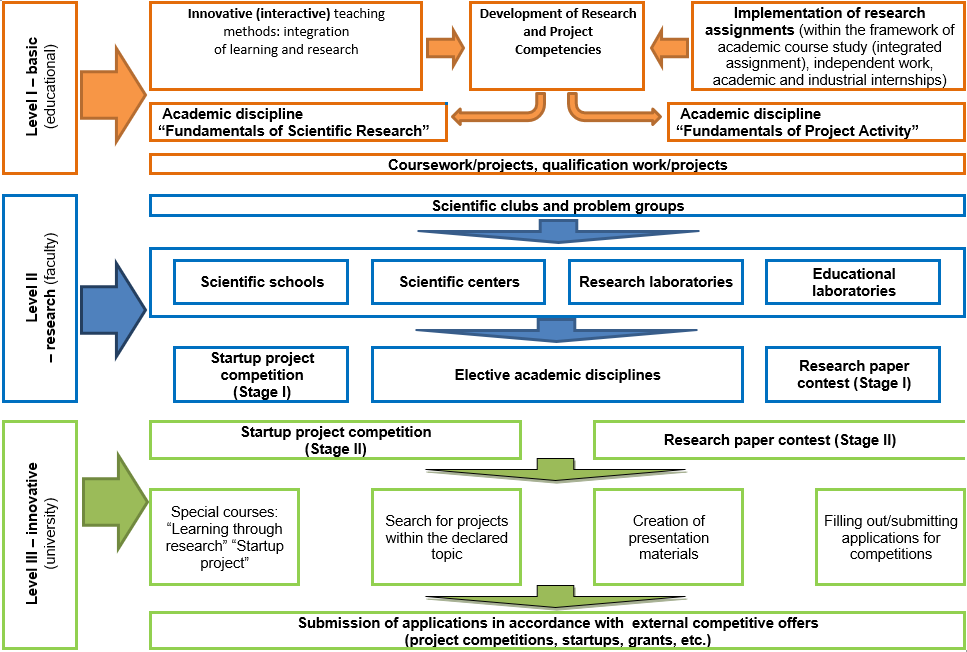
Figure 1. Structure of the School of Research, Project, and Startups
The structural organization of the school’s work (in accordance with the developed model) encompasses the substantive and technological support for the step-by-step development of research competencies, as well as the transition from elementary to more complex forms of project and startup-related activities. The model is based on the integration of all research and project-based opportunities and the algorithmization of the process – from the broader context of educational activity to initiatives implemented at the faculty level, and subsequently at the university level.
The implementation of each level/phase involves specific functions and a set of priority tasks, as well as a thorough consideration of both the existing experience in organizing this type of activity and the available potential.
Level I – Basic (Educational): the system of organizing the educational process for students, which includes:
- Enhancement of research potential through the integration of teaching and research activities across all academic disciplines (e.g., problem-based learning; interactive teaching methods; the completion of research tasks relevant to future professional contexts, etc.);
- Ensuring practice-oriented learning in disciplines related to research and project activities (e.g., Fundamentals of Scientific Research, Project Activities of Future Professionals, etc.), including the development of specific projects and startups grounded in theoretical and technological foundations;
- Execution of research tasks during internships, which involve the project of models and their practical testing;
- Preparation of course papers and qualification works (based on students’ choice) that include the development of original startups/projects, accompanied by theoretical justification of the chosen approach.
Outcome: acquisition of fundamental skills in research and project-startup activities; initial attempts at projecting within the context of core professional domains; creation of an individual project or startup; motivation for its further development, as well as for acquiring the competencies necessary for such advancement.
Level II – Research Stage (Faculty Level):
- Participation in the work of scientific centers and laboratories, particularly in the project of instruments, innovative technologies, and models of activity aligned with the research focus of the respective academic unit;
- Formation of research groups, organized around a shared process of developing a project or startup, or a set of interrelated projects/startups addressing thematically connected problems;
- Establishment of organizational and advisory centers (led by faculty vice-deans for research and international cooperation, and faculty members specializing in research-project topics) to coordinate and support this type of activity;
- Organization of faculty-level competitions for startups and research projects that include original project elements, involving public presentation and defense of proposed initiatives.
Outcome: as a result of academic learning and various forms of research activity, student groups are formed consisting of individuals who have demonstrated particular aptitude in the creation of startups and projects, as well as in publicly defending them at the faculty level, with the involvement of interested parties and stakeholders.
Level III – Innovation Stage (University Level): This stage includes an educational component for talented students – those who aim to enhance their research competencies in the development of innovative products – as well as a consultative and acceleration component for those with sufficiently developed projects/startups and a desire to participate in various competitions (at the university, national, and international levels):
- Formation of student groups for participation in specialized elective programs focused on startup development and presentation formats. These programs are intended for students who have demonstrated strong aptitude and prior experience in project and startup creation, and who are motivated to advance their project-related competencies (e.g., refining their startups to align with labor market demands). This also involves the continuation and refinement of approaches to projects and startups initiated at earlier stages;
- Consultations provided by university research and fundraising departments to support research groups in the development of scientific projects, identification of relevant competition opportunities, and preparation of the necessary application materials;
- Professional development for academic staff, aimed at building competencies in project-based and startup-oriented methodologies (e.g., Learning through Research, Startup Project, and related areas);
- Organization of a university-wide startup competition, with the involvement of external experts and stakeholders, along with recommendations for selected teams to participate in regional, national, and international contests.
Outcome: increased interest among students in innovation-related activities and in realizing their creative and research potential; establishment of a systematic, step-by-step process for the development of competitive innovative products (projects, startups); provision of opportunities for their testing and validation through participation in competitions at various levels.
Since the school model is interdisciplinary, a mechanism for its adaptation to various academic profiles is provided. For example, humanitarian (philology, history, journalism) – research of cultural practices, linguistic identity; design in the field of communications, media, etc.; natural sciences (biology, chemistry, physics) – laboratory research, validation of hypotheses; Eco-and bio-startups; creation of interdisciplinary STEAM projects; economic, management – business modeling, market analysis; initiative of entrepreneurial ideas; consulting in projects of other profiles; educational (pedagogy, psychology) – development of innovative educational tools; research projects on education; startups in the EdTech sphere, etc.
Results of experimental studies
At the stage of revising the model of the school and refining the substantive and technological foundations of its functioning, a diagnostic-level study was conducted involving 411 students of various academic levels and 123 faculty members of Kamianets-Podilskyi Ivan Ohiienko National University. This comprehensive assessment made it possible to determine the actual level of motivation and readiness for the specified type of activity. The diagnostic stage of the experiment also allowed for the identification of general trends in the studied process, existing achievements, successful cases, as well as the key challenges that hinder the development of research and project competencies and the preparation of competitive products within the youth innovation market.
The following data collection tools were used in the experimental study: questionnaires (author’s developments) using an adequate response format (Likert scale, open-ended answers, etc.), tests. Reliability/validity when using adapted scales was proven by the results of testing. The value of the Alpha Cronbach reliability coefficients, which measures the internal consistency of test questions, was determined. For the author’s tools, a description of the expert validation procedure with the involvement of specialists was also used. Content analysis was used to analyze research conversations, interviews, open-ended questions, and focus groups.
As an example, a fragment of the experimental materials and a possible interpretation thereof are presented below. At this stage of the experiment, a systematic diagnostic assessment was carried out (via surveys, testing, and research interviews) with the following objectives:
– to provide students with the opportunity to conduct a localized self-study on the role of research and project-based activities (attitudes, readiness, successful practices, etc.) in their professional development;
– to determine (through self-assessment) the overall level of student preparedness for activities grounded in research, as well as the nature and strength of their motivational foundation;
– to identify the degree of development of relevant processes/tools (e.g., soft skills, availability of original ideas, etc.) that are important for research and project;
– to diagnose the presence of actual experience or prior achievements in the field of research, project, and startup-related activities.
The analysis of the results obtained for Criterion I (capacity for self-research) indicates that students generally lack effective practices in self-directed inquiry, as evidenced by the findings from research-based interviews. In particular, students reported that they had not engaged in a comprehensive exploration of their own identities and abilities. Many of the questions posed during the diagnostic phase proved challenging for them, prompting deep reflection or being answered based on spontaneous or superficial self-perceptions.
A notably positive outcome of the diagnostic studies was the recognition among students of the complexity of the modern job market and the importance of developing their future competitiveness. It is an attitude, that counters the notion of “learning merely for the sake of obtaining a diploma”. Their self-identification with the statement, “I entered university to become a highly qualified professional (rather than just to earn a degree)”, serves as clear evidence of this awareness (Figure 2).
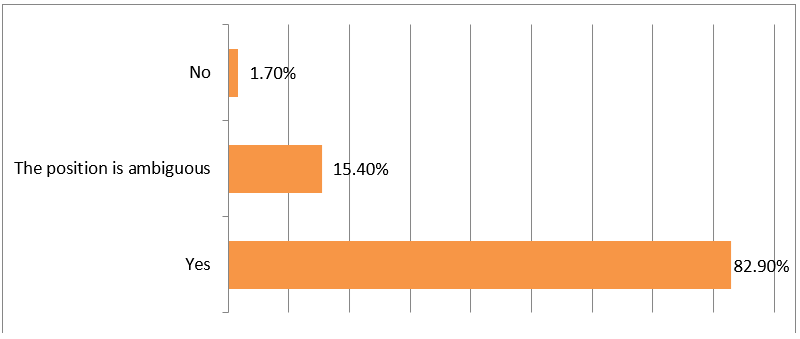
Figure 2. Level of professional motivation
However, a significant discrepancy was observed between students’ declared intentions and their actual learning experiences, which point to a relatively low level of development of their project and research competencies.
Particularly informative was the diagnostic assessment of students’ attitudes and interest toward research work, project development, and startup creation, conducted through self-assessment. This data, when correlated with subsequent forms of activity (such as willingness to learn and to implement their own ideas) during the experimental learning phase, provided valuable insights (Figure 3).
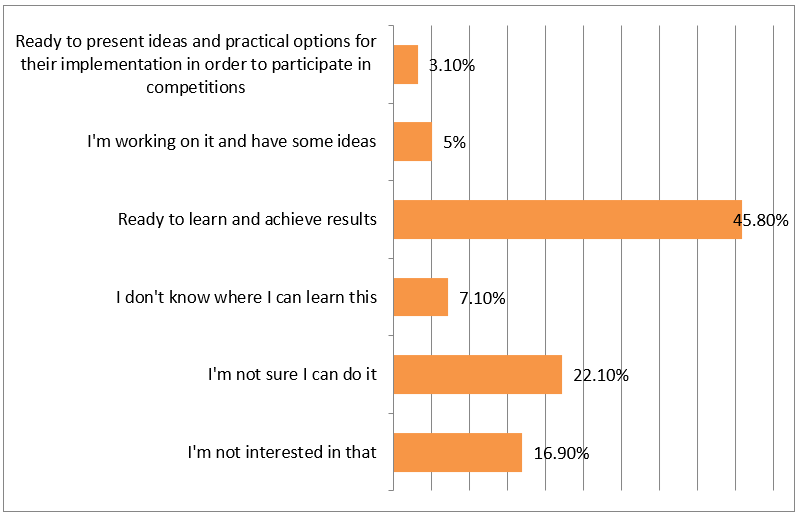
Figure 3. Atitude towards research and project work, relevant experience
Significant contradictions between intentions and readiness to implement them have been identified. This is evidenced by the fact that a significant number of students declared their interest and intention to improve their competence in a purposeful and systematic manner by joining the School of Research, Project, and Startups, but the very first classes demotivated them regarding further prospects. The main reason, as indicated by the students, was the complexity of the work and their unpreparedness to perform research tasks. In addition, most students do not have a clear understanding of the essence of project and startup activities and their final results.
They also indicate that during the course of academic activities at the university (as in school), the use of research and project-based methods was rather sporadic. In response to the question, “Do you believe that the educational process at the university contributes to the development of your research skills?”, 44% of respondents answered “to a significant extent“, i.e., by 60 – 80%, while 27% rated this process quite low (situationally, insufficiently). Additional diagnostic tools (testing, research-focused interviews) revealed that, when answering these questions, particularly among students who highly rated the use of research and project-based technologies, a rather superficial understanding of their essence and forms of implementation in the educational process was observed (as evidenced by the results of testing and research interviews) (Figure 4).
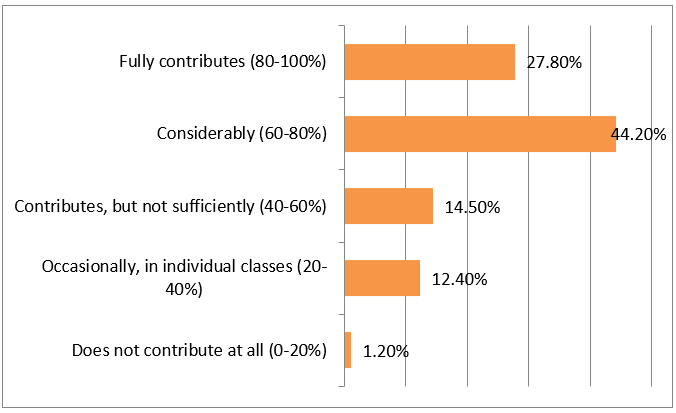
Figure 4. The level of focus of the educational process at the university on the development of students’ research and project skills (self-assessment)
The analysis of the diagnostic results revealed a significant discrepancy between the actual level of formation of project-research competencies among future professionals (relatively low), their understanding of the importance of such activities for future professional self-realization and beyond (relatively high), and their actual readiness to develop these competencies by engaging with opportunities offered by formal, informal, and non-formal education.
Specifically, students reported that they have ideas or preliminary developments that could potentially be transformed into projects or startups for participation in youth competitions (56%). However, only 31% of respondents expressed a willingness to work on realizing their potential, for instance, by taking advantage of opportunities to receive additional consultative and technological support in developing research skills, preparing projects, and launching startups (Figure 5).
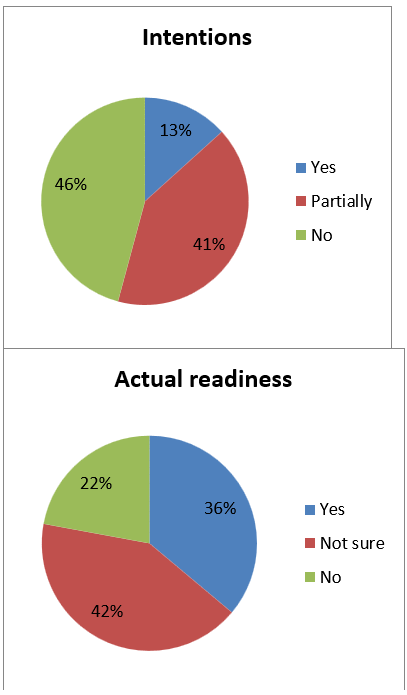
Figure 5. Discrepancy between students’ intentions and their actual readiness to engage in the development of research, projects, and startups
The following factors are seen as underlying the observed dissonance between students’ intentions and their actual readiness to engage in research, project, and startup development:
- The field of project-based, research-oriented, and startup activity, which is inherently interdisciplinary and evolves within the framework of competency-based education, remains relatively new to students. As a result, they often demonstrate a limited understanding of its nature, functionality, and technological specifics. This is supported by the results of students’ self-assessment and their correlation with the levels of project-research competence formation, as revealed by a set of diagnostic tools.
- While awareness of the characteristics and challenges of the modern labor market fosters an adequate motivational foundation for learning, the lack of a clear understanding of their own actual capabilities and developmental prospects (stemming from challenges such as the insufficient differentiation of instruction, lack of effective individual educational trajectories, and limited use of innovative educational technologies) hampers students’ ability to plan for and achieve personal success. This particularly affects their engagement in competitive formats (project-and startup-based work) grounded in research activity.
- The absence of established educational practices based on interactive learning, which would include the active application of research and project methods, as well as the lack of structured opportunities (across formal, non-formal, and informal learning formats) for the purposeful and gradual development of students’ research and project-based thinking.
- The limited availability of competitive platforms to stimulate and test individual achievements in scientific, project-oriented, and startup-related activities.
All diagnostic results obtained served as the foundation for the project of the School, including its content, technological, and consultative support. These results also guided the creation of conditions for planning students’ individual research trajectories, with a focus on the step-by-step development of project-research competencies, the creation of project/startup products, and their presentation in competitions at various levels (faculty, university), including those involving potential investors.
We see the strengths of the project in the development and testing of a real model of systematic and phased formation of project and research competencies of future specialists. The most valuable is the integration of this process into the structure of educational activities. In this way, the university has the opportunity to identify the most talented student youth, their research potential and offer them real opportunities for targeted development of their competencies.
We associate the weaknesses of the project with the lack of experience in forming such projects that have a university context. It is difficult to integrate all the research capabilities of the institution and target them at a set of specified goals. The problems of motivating students to research and project activities have not been fully resolved, a significant number of them do not associate research and project competencies with the real quality of professional training, high competitiveness in the labor market. There are significant problems with the adequacy of self-assessment of readiness for project activities.
Conclusions
Thus, the integration of educational, research, and project activities represents one of the strategic directions for ensuring the innovative development of the professional training system.
As demonstrated by the results of theoretical studies and experimental teaching practices, the issue of optimizing research and project activities within the education system, particularly in the training of highly qualified specialists, lies in the domain of adopting a systematic approach to process organization, as well as in the creation of an appropriate educational environment. The pilot implementation of the concept and program of the School of Research, Project, and Startups, developed with the aim of significantly expanding students’ opportunities to engage in real research activities and to develop competitive projects and startups based on this involvement, has yielded positive results in the following areas: a) popularization of innovative forms of educational activity and the provision of opportunities for the broad application of research-project methods within the educational process structure; b) enhancement of students’ professional competence and their ability to work within a research-project framework; c) enabling talented students to engage in innovative development, realize their potential within the relevant field, and participate in competitions for scientific papers, startups, projects, and more.
As a result, a higher level of student engagement in research activities has been observed both during academic coursework and through a significant increase in the number of students participating in various types and levels of competitions (scientific papers, projects, startups).
Future research in this area is expected to focus on: a) a more systematic study of the theoretical foundations of research-project activities; b) the synthesis of contemporary European and national educational practices aimed at integrating instructional and research components and actively employing research and project-based technologies; c) the development of student hubs for the comprehensive preparation of students in research and startup project development.
References
Anishchenko, V. M.; Artiushyna, M. V.; Herliand, T. M.; Kulaeva, N. V. (Ed.). (2019). Teoriia i praktyka proektnoho navchannia u profesiino-tekhnichnykh navchalnykh zakladakh. Monohrafiia. Zhytomyr: Polissia [in Ukrainian]. ISBN 978-966-655-908-4.
Bulvinska, O. (2019). Cuchasni metody navchannia i vykladannia na osnovi doslidzhennia: zarubizhnyi dosvid, Osvitolohichnyi dyskurs, 1 – 2, 24 – 25, 83 – 103 [in Ukrainian]. DOI 10.28925/2312-5829.2019.1-2.83103.
Healey, M. (2005). Linking research and teaching: exploring disciplinary spaces and the role of inquiry-based learning. McGraw Hill / Open University Press, 67 – 78.
Jaspers, K. (1959). The Idea of the University. Boston: Beacon Press. ISBN: N/A.
Kasich, A. O.; Dzhura, A. M. (2019). Startapy yak forma pidpryiemnytskoi diialnosti: poniattia, znachennia, zarubizhnyi dosvid. Investytsiyi: praktyka ta dosvid, (2), 24 – 31 [in Ukrainian]. ISSN 2306-6814. DOI 10.32702/2306-6814.2019.2.24.
Horokhivska, T. M., Demchuk, B. A. (2023). Proiektne navchannia yak faktor pidvyshchennia kvalifikatsii naukovo-pedahohichnykh pratsivnykiv ZVO. Modern Information Technologies and Innovation Methodologies of Education in Professional Training, (66), 132 – 141 [in Ukrainian]. DOI 10.31652/2412-1142-2022-66-132-141. ISSN 2412-1142.
Ievtushenko, I. V. (2023). Rol proiektnoi diialnosti u formuvanni doslidnytskoi kompetentnosti zdobuvachiv vyshchoi osvity. Osvitno-naukovyi prostir, 4(1), 26 – 34 [in Ukrainian]. DOI 10.31392/ONP.2786-6890. ISSN 2786-6890.
Kalashnikova, S.; Bazeliuk, N.; Bazeliuk, O., 2023. Vdoskonalennia vykladannia u vyshchii osviti: teoriia ta praktyka. Kyiv: Instytut vyshchoi osvity NAPN Ukrainy [in Ukrainian]. ISBN 978-617-7644-57-5.
Radkevych, V. O., Borodiienko, O. V., Pukhovska, L. P., Samoilenko, O. A., Radkevych, O. P., Bazeliuk N. V. (2020). Proektna diialnist u systemi profesiinoi (profesiino-tekhnichnoi) osvity: praktychnyi posibnyk. Zhytomyr: Polissia [in Ukrainian]. ISBN 978-966-655-962-6.
Sysoieva, S. O., Kozak, L. V. (2016). Rozvytok doslidnytskoi kompetentnosti vykladachiv vyshchoi shkoly: navchalnyi posibnyk. Kyiv: TOV Vydavnyche pidpryiemstvo EDELVEIS [in Ukrainian]. ISBN 978-966-2748-91-8.
ThieL, P., Masters, B. (2015). Vid nulia do odynytsi. Notatky pro startapy, abo yak stvoryty maibutnie. Kyiv: Nash format [in Ukrainian]. ISBN 978-617-8120-90-0.
Zhelyazkova-Teya, T., 2023. Informal Educators as a Subjects of Pedagogical Interaction in Pedagogy of Informal Education. Vocational Education [online], 1(25), 28 – 40. DOI 10.53656/voc23-121info. ISSN 1314–8567.
Dr. Tetiana Franchuk, Assoc. Prof.
ORCID iD: 0000-0003-2404-0771
WoS Researcher ID: JEV-7039-2023
Prof. Dr. Svitlana Myronova
ORCID iD: 0000-0002-9418-9128
WoS Researcher ID: ABB-8844-2021
Prof. Dr. Iryna Yashchyshyna
ORCID iD: 0000-0002-9107-7980
WoS Researcher ID: ABW-4855-2022
Dr. Lesia Ruda
ORCID iD: 0000-0001-5008-2751
WoS Researcher ID: JZS-9775-2024
Kamianets-Podilskyi Ivan Ohiienko National University
Mr. Igor Boіko, PhD Student
ORCID iD: 0009-0003-6164-4395
WoS Researcher ID: NXX-9327-2025
Kamianets-Podilskyi Ivan Ohiienko National University
Kamianets-Podilsky, Ukraine
E-mail: franchuk@kpnu.edu.ua
E-mail: myronova@kpnu.edu.ua
E-mail: yarinaeco@kpnu.edu.ua
E-mail: ruda@kpnu.edu.ua
E-mail: opndf24z.boiko@kpnu.edu.ua
>> Изтеглете статията в PDF <<

Свързани статии:
 State and Barriers to the Digitalization of Small and Medium-Sized Enterprises in Bulgaria
Formation of Professional Skills of Agricultural Engineers during Laboratory Practice when Studying Fundamental Science
Model of Professionally Directed Training of Future Engineer-Teachers
Development of Democratic Culture through Contents about the Roma in Classroom Teaching – Students’ Perception
State and Barriers to the Digitalization of Small and Medium-Sized Enterprises in Bulgaria
Formation of Professional Skills of Agricultural Engineers during Laboratory Practice when Studying Fundamental Science
Model of Professionally Directed Training of Future Engineer-Teachers
Development of Democratic Culture through Contents about the Roma in Classroom Teaching – Students’ Perception