
Albena Vutsova,
Olga Ignatova
Sofia University „St. Kliment Ohridski” (Bulgaria)
Ieva Tenberga
University of Latvia (Latvia)
Hasan Arslan
Canakkale Onsekiz Mart University (Turkey)
https://doi.org/10.53656/ped2026-4.05
Abstract. This article explores the integration of Augmented Reality (AR) in sustainability education within primary school contexts. Drawing on constructivist, experiential, and multimodal learning theories, the study frames AR as a transformative pedagogical mediator. By examining its alignment with the European Green Deal and the GreenComp sustainability competence framework, the article presents a three-phase instructional model for AR-based environmental learning. It also addresses ethical, cognitive and technological issues, providing a clear view and future directions for those wanting to promote meaningful, equitable and competence-based use of AR with pupils and students. The methodology of qualitative document analysis, conceptual modelling and integrative literature review are integrated into a pedagogical model that is theoretically informed. The results indicate that when designed-in a thoughtful manner, AR has the potential to significantly increase student engagement, support inclusive learning, and promote early-stage sustainability competence development. Though the design is based on theory and practice, its hypothetical character does not allow empirical generalisation. Additional studies are needed to confirm its long-term effects and generaliseability in various educational outcomes.
Keywords: augmented reality; sustainability education; GreenComp; primary school; pedagogy
- Introduction
The growing urgency of the global environmental crisis demands a re-orientation of education towards developing sustainability capabilities from a young age. Traditional classroom practices often fall short when teachers try to encourage learners to work with complex systems, explore questions independently, or think critically about environmental issues. Because of this, educators are increasingly considering how Augmented Reality (AR) might contribute to sustainability learning by illustrating invisible ecological dynamics, enabling hands-on simulations and helping children relate theoretical ideas to concrete experiences (Dunleavy et al., 2009; Wu et al., 2013). Situated within the broader ambitions of the European Green Deal, this article examines the pedagogical foundations and learning opportunities that AR can offer for strengthening sustainability competences in primary education. Its potential is not found in technological novelty alone, but in the meaningful alignment between innovation, pedagogy and the values of equity and sustainability.
At the same time, scholars such as Wu et al. (2013) emphasise that AR must be integrated intentionally, with attention to technical reliability, cognitive load, and teacher preparedness. Within the tradition of Education for Sustainable Development (ESD), participatory and value-oriented learning (Tilbury & Wortman, 2004) can be supported through AR’s ability to simulate complex ecological situations, scaffold role-play, and foster ethical reflection. Freire’s (1970) view of education as a practice of freedom similarly resonates with AR’s capacity to empower young learners to critically examine social and environmental issues. From an inclusivity perspective, the principles of Universal Design for Learning – CAST (2018), provide a useful lens for analysing AR. Its multimodal nature engaging visual, auditory, and kinesthetic modalities supports flexible learning pathways and can broaden access for diverse learners, including those with additional learning needs.
Research on AR further highlights its contribution to active and constructive learning processes (Chi, 2009) and its effectiveness in enhancing engagement, spatial reasoning, and conceptual understanding (Bacca et al., 2014). Building on this evidence, needs-analysis results also show that AR helps primary learners actively construct scientific understanding through visualisation and inquiry-based tasks (Rukayah et al., 2021). These qualities are particularly relevant to sustainability education, which requires both cognitive grasp of interconnected systems and emotional engagement with the implications of environmental change.
Research in digital pedagogy increasingly points out that learners benefit most from environments where they can question ideas, collaborate meaningfully, and exercise agency (Lai, 2011; Sumardi et al., 2020). By combining classroom teaching with opportunities for discovery and dialogue, AR gives students ways to connect more abstract material to practical experiences from their daily lives.
The GreenComp framework (Bianchi et al., 2022), which defines twelve sustainability competences across values, systems thinking, futures thinking, and action, serves as a conceptual reference for evaluating AR’s pedagogical potential. AR aligns well with these competences by translating abstract sustainability concepts into interactive, emotionally resonant, and developmentally appropriate learning experiences. Through multimodal simulations and storytelling, AR can foster systems and critical thinking, imagination, agency, and value-based reflection dimensions central to fostering responsible environmental citizenship (Sobel, 2004; Bower et al., 2022).
In this study, GreenComp is used both as an analytical lens and as a guiding structure for designing AR-supported learning activities, ensuring alignment with current European sustainability and digital transformation priorities.
Table 1. Mapping of AR Activities to GreenComp Competencies
| AR Activity | GreenComp Competency | Educational Outcome |
| Visualization of the life cycle of waste materials through an AR application | Systems thinking | Ability to trace the relationships between human activities and ecosystems by students |
| Simulation of a sustainable future (e.g., a green city using AR) | Critical thinking | Stimulating imagination and developing sustainable solutions |
| Interactive storytelling about climate refugees through AR | Improving perception | Building empathy toward communities affected by climate change |
| Group creation of an AR-based poster for an ecological cause | Environmental orientation of thinking and communication/team skills in this field | Developing communication skills and fostering collective responsibility |
Source: authors’own work.
Table 1 illustrates relations between specific AR-based learning activities; core competencies defined in the GreenComp framework, and respectively cognitive, affective, and behavioural outcomes.
- Theoretical Framework
The pedagogical integration of AR is grounded in well-established learning theories. Constructivist and socio-cultural perspectives (Piaget, 1952; Vygotsky, 1978; Dewey, 1938; Kolb, 1984; Lave & Wenger, 1991) emphasize knowledge construction through authentic, interactive, and reflective engagement. In AR settings, these principles are realized as learners manipulate digital content embedded in real-world contexts. Elements of behaviorism, later reinterpreted by cognitivist theories (Winn, 1996), also highlight the importance of structured observation and experimental design in shaping effective learning.
Complementary perspectives further reinforce AR’s potential. Mayer’s (2009) multimedia learning theory suggests that multimodal formats enhance retention, while Sweller’s (1988) cognitive load theory warns against excessive complexity. Connectivism (Siemens, 2005) and embodied cognition (Säljö, 1999) stress the value of networked learning and sensorimotor engagement, both naturally present in AR-supported activities.
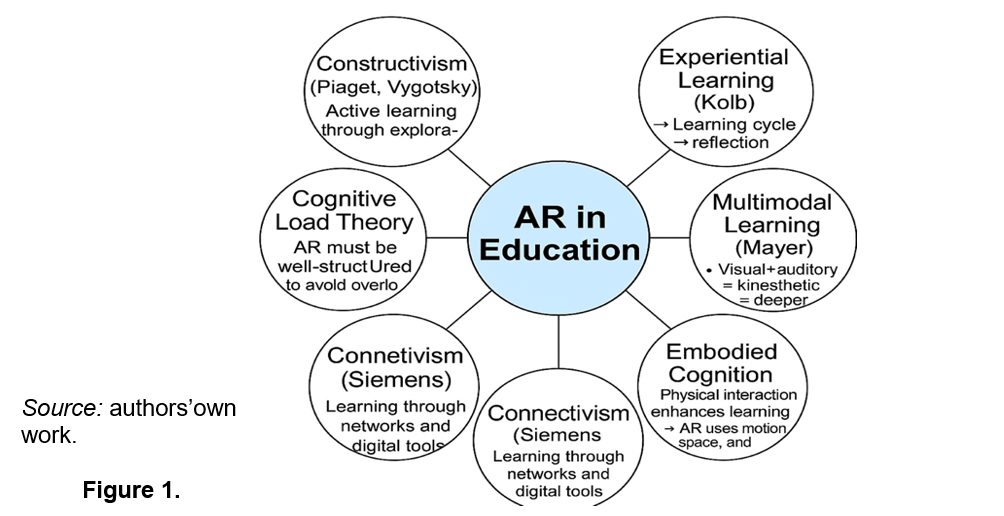
Figure 1 illustrates the grid of key learning theories – constructivism, experiential learning, situated learning, multimodal learning, and embodied cognition, contributing to Augmented Reality integration into education.
Teachers frequently use AR for collaborative group work, from designing digital posters to experimenting with interactive simulations, which helps pupils practise communication, cooperation and environmental thinking (Gay, 2010). Because AR combines multiple modes of representation, it supports the inclusive learning principles outlined in Universal Design for Learning (CAST, 2018). When linked to the GreenComp framework (Bianchi et al., 2022), AR can serve as an engaging entry point for developing sustainability competences even in the early years of schooling.
Recent empirical research further validates these theoretical assumptions. Volioti et al. (2023) demonstrated that an AR mathematics app significantly enhanced motivation and conceptual understanding. Marín (2022) reported positive teacher and pupil attitudes, emphasizing AR’s role in fostering engagement. Haq (2023) found that a specially designed AR system improved language learning outcomes and cognitive engagement among primary school pupils in rural China. A systematic review by Lampropoulos (2024), synthesizing over sixty studies, confirmed AR’s effectiveness in natural sciences, particularly in developing systems thinking and spatial imagination. Together, these findings consolidate AR’s status as both a theoretically grounded and
Ethical discussions around AR in schools have also become more focused and specific. Current research on immersive technologies in education stresses the importance of privacy-by-design, age-appropriate content, and transparency regarding data use when children engage with AR applications (Peña-Acuña, 2024). These principles are in line with international child-rights frameworks for digital environments3) and with lessons learned from real classroom implementations (Southgate, Smith, & Cheers, 2018). In the context of primary education, these principles require the minimisation of data collection, the avoidance of geolocation tracking, and strong teacher facilitation to ensure that immersive AR experiences remain developmentally appropriate and ethically safe. For this reason, in the present study ethics is considered not as a separate aspect but as an essential design requirement favouring limited data collection, the use of offline modes whenever possible, clear consent procedures, and strong teacher mediation throughout the learning process.
- Methodology
This study adopts a qualitative, multi-method research design, grounded in scientific inquiry, to explore how Augmented Reality (AR) can support the development of sustainability competencies in primary education. The methodology integrates qualitative reasoning, content analysis, and selected quantitative indicators, ensuring a robust and analytically rigorous approach.
The research starts with a documentary and content analysis of national curricula, educational policy documents, and teaching guidelines, focusing on how AR and sustainability are represented within official educational frameworks. This material, particularly those in line with the European Green Deal and the GreenComp framework, were subject to systematic coding and analysis. The goal was to establish how often, for what reasons, and around what themes AR happens in diverse educational contexts. This phase served as the empirical foundation to map the reach and conceptualisation of AR in sustainability education. Based on this empirical base, a conceptual model is developed in order to provide a theoretical framework.
Building on this empirical foundation, the study applies conceptual modelling to construct a theoretical framework. Constructed on a synthesis of learning theories (constructivism, experiential learning, situated learning, multimodal learning, cognitive load theory, and embodied cognition), the paper develops a three-phased framework for AR-enhanced environmental education. This model is part of an overall model designed to promote cognitive engagement, conceptual depth, and relevance to life in the real world, and is based on integration of theory and practice constituencies. This project also enhances the overall scientific integrity of the project with an integrated review of the literature. In dialoguing with a critical examination of latest trends in AR application to education as well as in ESD pedagogy and multimodal learning environment development, we place the study within current academic debate and validate the presented conceptual framework.
The qualitative study is supplemented by a quantitative component, with frequency analysis of AR-related terms and themes contained in resource and policy documents. These indicators strengthen the empirical validity of the findings and demonstrate the extent to which AR is present and pedagogically positioned within national education systems.
The study involved exploratory visits and pilot activities in three Bulgarian primary schools. In the first school, four teachers worked with four early-grade classes during short AR-enhanced learning sessions. In the second, approximately fifteen teachers participated in a professional development workshop in which AR-supported sustainability scenarios were modelled and discussed. The third school carried out a small pilot with two teachers and about twenty pupils. These activities generated observational data under real school conditions and informed the conceptual model.
In Latvia, the project team conducted teacher-led design simulations and limited pilot testing. Due to the iterative nature of the activities, exact participant numbers were not recorded, and the Latvian contribution consists primarily of qualitative insights from teacher reflections and scenario-based modelling.
Across both contexts, the study draws on multiple qualitative sources, including structured classroom observations, teacher reflection logs, semi-structured interviews and the analysis of learner artefacts such as drawings, digital posters and short written reflections. These data were triangulated to strengthen methodological validity and to capture pupils’ engagement, collaboration and emerging sustainability-related understandings. Together, this multi-source evidence base complements the documentary analysis and supports the development of a pedagogically grounded framework for AR integration in sustainability education.
To ground the research in real-world educational practice, two case studies were conducted over the schools in Bulgaria and Latvia because they operate in similar educational structures, curricular traditions, and face common challenges related to the development of digital skills in primary education. Considering the need-based and transformative and/or pottering potentials of AR and focusing on AR use in two countries with similar systemic needs, the study endeavours to provide transferable understandings that take account of the affordances and limitations of AR integration in actual classrooms.
In Bulgaria, AR is been in early phase of adoption found to be significantly used in science and project based learning, mostly initiated by isolated schools. In Latvia also the use of AR tools in teaching process is uncommon – mostly it is teacher’s own initiative and ability to create a studies process in the use of technology, but at the same time the activity with AR tools can make not only to understand more complex issues.
The comparative perspective adds to the external validity of the results. Base on the triangulation of document analysis, conceptual modelling, and literature review, we develop scientific-based and pedagogy-oriented framework for AR integration in sustainability education. The method also provides sufficient theoretical solidity combined with empirical insight and serves as a basis for further validated research like classroom intervention, comparative field studies that can more accurately and finely calibrating the instructional model.
- Empirical Findings: Simulated Case Study Bulgaria and Latvia
The study is based on simulated classroom scenarios developed as part of the GreenWithAR project (2023 – 2025), which explored how augmented reality can be used to support sustainability education in European primary schools. The simulations were carried out in collaboration with primary school teachers and pupils from Bulgaria and Latvia, who helped design and pilot short learning units supported by AR tools. Although the activities were not full-scale classroom interventions, they were implemented under realistic school conditions and provided valuable insights into how AR can encourage environmental awareness, systems thinking, and inclusive learning practices. During the simulations, teachers took on the role of facilitators and reflective practitioners, while pupils engaged as active participants in the learning process. In addition, a few parents shared informal feedback through short reflection forms, offering complementary perspectives on how children talked about and applied what they learned at home.
In order to give empirical substance to the theoretical and design claims made above, a simulated case study, appropriate to the realistic form of an AR-enhanced sustainability education experience in a European primary school, is presented. Although this is not a fieldwork product of a real-time study, the study scenario is constructed based on the pedagogical frameworks and approaches such as the GreenComp sustainability competence model (European Commission, 2022), and design strategies developed in the project GreenwithAR (2023). These foundations ensure the scenario is theoretically sound, context-sensitive, and aligned with current European educational priorities[1].
The unit, titled “Waste and the Environment”, targets second-grade learners (ages 8 – 9) and follows a three-phase instructional model: preparation, interaction, and reflection. During the Pre-AR phase, students explore waste-related themes through storytelling and collaborative questioning. In the AR phase, phone are used to visualize the life cycle of waste items, supported by data on decomposition, emissions, and environmental impact. The Post-AR phase engages learners in group synthesis activities, culminating in peer presentations and sustainability pledges.
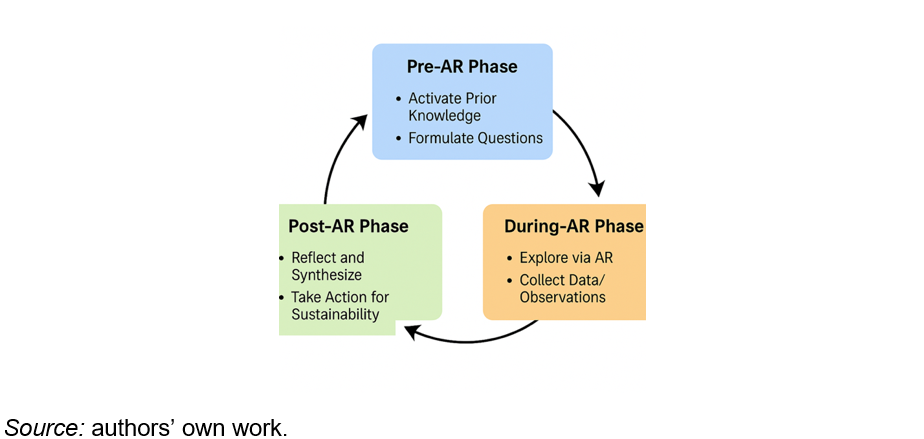
Figure 2. Three AR phase of education
Learning outcomes identified in this simulated practice highlight several key impacts. Qualitative indicators including student artifacts, reflective journals, and teacher feedback point to increased engagement, particularly among students with lower verbal proficiency who benefited from the visual and interactive nature of AR. Participants were already exercizing very early-stage systems thinking when they connected own behaviour to broader environmental consequences, as embraced by GreenComp dimensions, interdependence and accountability. Prosocial behavior was also detected: students engaged in waste reduction levers within the school setting, in terms of peer-driven initiatives and improved recycling habits. These results are in line with previous study programs (Dunleavy & Dede, 2014) that showed that, using an immersive, reflective learning environment can foster a meaningful behavioral change.
Table. 2 Summary of AR Implementation in Bulgaria and Latvia
| Category | Summary (Bulgaria) | Summary (Latvia) |
| Type of Implementation | Local school projects, extracurricular clubs, teacher-led initiatives | Local school, extracurricular clubs, teacher-led initiatives |
| Educational Level | Primary (Grades 2nd – 4th) | Primary (Grades 3rd – 6th) |
| Subject Areas | Science, Environmental Studies, Technology | Natural Sciences, Technology |
| Typical Duration | Single lessons or short thematic units (1 – 2 sessions) | Double lesson (2×40 min) |
| Pedagogical Focus | Systems thinking, environmental awareness, behavior change | Improving environmental literacy, experimental learning, technology-enhanced learning |
| Observed Student Reactions | High engagement; increased curiosity | Stimulating high engagement and curiosity, spontaneous discussions, increased personal reflection |
| Teacher Feedback | Positive AR enhances conceptual understanding and motivation | Bettering student motivation, curriculum alignment, improved understanding |
| Inclusivity Potential | High particularly beneficial for students with lower verbal proficiency | Promoting inclusivity by ensuring all students had equal access to the AR experience through shared devices and group work, fostering participation regardless of background or individual learning needs. |
| Connection to GreenComp | Aligned with values-based reflection, and critical and systems thinking | Contributing to GreenComp by fostering personal responsibility, systems thinking, and sustainable everyday practices, aligning with key competences like “acting for sustainability” and “valuing sustainability.” |
Source: authors’ own work.
Comparative analysis of the Bulgarian and Latvian cases reveals both shared tendencies and contextual differences in the exploration of AR in primary education. In both countries, the simulations showed increased pupil motivation, curiosity and understanding of environmental topics. Bulgarian teachers placed stronger emphasis on creativity and interdisciplinary, project-based uses of AR, whereas Latvian teachers demonstrated higher digital competence and more structured lesson planning, though sometimes constrained by limited access to mobile devices. Institutional support and teacher training emerged as critical factors for long-term adoption. Despite differing starting conditions, the findings indicate that AR can function as a flexible pedagogical tool for sustainability learning when supported by adequate resources and teacher preparation.
In the case of Bulgaria, the AR-enhanced model reflects practices emerging at the local school level, where such activities are typically embedded in project-based or extracurricular initiatives. Evidence indicates that AR can generate high learner engagement and curiosity, even with limited institutional backing. Teachers reported that students not only understood environmental cycles more clearly, but they began to take the initiative to apply this knowledge in daily life e.g., administering the recycling bins in their classroom or talking about waste with their family.
The application of Augmented Reality in Bulgarian primary education is still at its onset but there are hopeful signs of piloting and creative local practices. To the best of our knowledge, it is only implemented in the format of small school project, teacher-practiced β system curriculum or after-school clubs, and it has not truly been integrated into the overall curricula systematically. However, they are also examples of bottom-up initiatives that carry a glimpse of hope for education.
Many teachers who have tried AR-supported learning activities remark on a substantial increase in student engagement and curiosity, particularly in science and environmental education. In several pilot studies (often as part of a topical short-term phase teaching unit or an interdisciplinary project), students were confronted with AR content that portrayed corresponding ecological processes in the actual world ranging from waste decomposition, evolving recycling paths to species loss. As a hands-on experience, it enabled students “to see” how abstract environmental concepts would unfold in a context that they themselves know so that learning became more concrete and relevant.
Teacher observations provide qualitative responses indicating that students not only retained subject-matter material better but also connected classroom information with personal behavior. After an AR immersion on waste and pollution, for example, we found that a few students submitted proposals to rearrange classroom waste bins whereas others showed interest in re-using one-sided printed or used papers. Some students went home and talked about what they had learned with their parents, sharing stories about microplastics or ways landfills impact the world that they had learned, offering a nascent form of environmental advocacy that extended beyond the classroom.
Crucially, AR seems also to be suited to inclusive education. Teachers note students with weaker verbal or written skills (especially those from bilingual or minority language backgrounds) are able to follow along when material is presented using visual and/or interactive means. This is consistent with generalities from immersion learning research that implied that AR could lower barriers to entry and offer more inclusive learning experiences (Dunleavy & Dede, 2014).
Although there is no national policy in Bulgaria to promote the use of AR in sustainability education, a number of instances indicate its potential and classroom applicability. Such bottom-up initiatives might have the potential to be used as a model for future curriculum reform, especially as digital competences and awareness for the environment are becoming more and more central in national education plans.
In the Latvian case, the incorporation of Augmented Reality (AR) for sustainability education was done in an after-school club at a primary school located in the capital of the country, Riga. The activity, however, was out-of-school but carefully structured in line with national curriculum, aimed at third-grade students primarily, although adaptation to grade levels 3-6 could occur. It also underscored persistent tensions in Latvia’s primary education between modern digital learning tools and pedagogical restrictions at the school level. It should also be mentioned that a lot of regular schools in Latvia denies students a possibility to use mobile phone at schools (regularly 1st – 3rd or 1st – 6th grades), which practically also creates some challenges in introducing AR in education. There are usually plenty of laptops, but far fewer tablets or smartphones that are well-suited to AR apps, emphasizing the infrastructural barrier to adoption. This pilot program was driven by classroom teachers with the help of a tech mentor and represents both emerging interests in digital innovation as well as an awareness that teachers need assistance when wrangling new tools. Based on the interviews, teachers felt that the student motivation, curiosity, and participation increased notably by AR-supported activities. More importantly, the activity seemed to facilitate a more profound understanding of concepts. Students showed enhanced skills in expressing major concepts involved in promoting environmental sustainability, for example, resource use, carbon footprint, and commonsense decisions on eco-action. Teachers saw that students were better able to relate abstract concepts to their own lives, something that happened rarely in more traditional lessons. AR’s visual and interactive experience allowed students to interact with sustainability in a manner that was accessible, but also engaging. Teachers also mentioned that during the activity, valuable universal values commonly emphasized in the Latvian Competency based educational model as focusing not only on knowledge but also on skills and attitudes, were being implemented (dim field 1). One such learning goal in the curriculum is the building of responsible and sustainable habits among students, including an awareness of the impact of one’s own and family behaviour on the environment (Väitöskirjapaja, 2015). The context of the AR lesson itself, was an opportunity to explore and apply these skills in concrete terms. During the session, students worked in small groups due to limited device availability. This setup unexpectedly encouraged rich peer-to-peer interaction and supported collaborative learning. As they took turns using the AR app, students engaged in extended conversations about their habits, like discussing issues such as walking versus driving to school, conserving water at home, or family dietary choices. These discussions reflected not only high engagement but also an evolving understanding of how individual choices relate to broader sustainability goals. Teachers observed that students began using topic-specific vocabulary more confidently and were able to explain cause-and-effect relationships related to environmental impact. Although the activity took place outside the formal classroom, both the teacher and the technology mentor noted that such in-depth, student-led dialogue would be harder to foster through conventional instruction alone. However, they also emphasised that AR’s success in this context relied heavily on structured facilitation. Without clear learning objectives and guided reflection, there was a risk of students perceiving the activity as mere entertainment. The preparatory discussion and teacher framing were therefore crucial in anchoring the experience in educational outcomes. Unlike some countries that actively track educational inclusion through technology, Latvia typically maintains a more universalist approach, avoiding direct discussions about student background differences in school. As such, the activity was designed to be inclusive through shared access, ensuring that all students had the opportunity to use the app regardless of device ownership or individual learning needs. Although no formal inclusion metrics were gathered, the structure supported equitable participation and allowed all students to contribute meaningfully. While the project collected only qualitative data, the feedback was consistently positive. Students demonstrated not only enjoyment but also growth in their ability to discuss sustainability topics with depth and confidence. Teachers reported that several students referenced their learning in later conversations and showed increased sensitivity to environmental issues in both classroom and informal settings. The Latvian example shows that, even with limitations in policy and infrastructure, AR can improve student interest and learning in sustainability education, especially when it follows the curriculum and involves teamwork among teachers. The case highlights the importance of ongoing technical and pedagogical support to scale such initiatives within the broader framework of Latvia’s digital education strategy.
- Pedagogical Implications
This case study illustrates the argument that Immersive Technologies can leverage the meaningful learning process on young children when embedded into thoughtful pedagogical design. The AR-enhanced class not only facilitated conceptual understanding, but also promoted various competences, such as collaboration, digital literacy, and citizenship. The case is notable for the potential it offers to teachers to step out of being a mere provider of content thus becoming a facilitator and co-learner, in the process of guiding discovery.
Moreover, the scenario underscores the importance of preparing educators with both technological fluency and pedagogical vision. Professional development sessions prior to the unit allowed teachers to rehearse the AR activities, anticipate student questions, and develop assessment strategies tailored to sustainability competencies.
Meaningful AR integration must also contend with ethical and data privacy considerations, particularly when implemented with young learners. As children engage with AR platforms, especially those connected to cloud-based or location-aware services there is a risk of exposing sensitive information, such as device identifiers, usage patterns, or even geolocation data. Ensuring compliance with data protection regulations, including the General Data Protection Regulation (GDPR) in Europe, is essential (Livingstone et al., 2019). AR experiences sometimes blur the line between learning and surveillance, especially when apps track student interactions or store personalised data. Educational institutions must ensure transparency about data usage and obtain informed consent from guardians2). Where possible, developers and educators should favor AR tools that priorities offline use, minimise data collection, or employ privacy-by-design principles (Cumbley & Church, 2013). Beyond privacy, ethical concerns include the potential overuse of screen time, emotional manipulation through immersive storytelling, and unequal access to devices. As immersive learning environments become more emotionally engaging, designers must be mindful of content that could cause distress or reinforce stereotypes (Behrendt & Franklin, 2014). Embedding opportunities for critical reflection and media literacy alongside AR use is essential to help young learners distinguish virtual representations from reality. These ethical dimensions reinforce the need for AR not only to be pedagogically grounded but also ethically designed and transparently implemented. Future projects should explicitly include ethical review processes, co-creation with stakeholders, and mechanisms for safeguarding student data and wellbeing.
- Discussion and findings
Applied in two national schools in Bulgaria and Latvia the three-phase model responds directly to contemporary educational challenges by offering several pedagogical advantages.
First, it enhances learner engagement through immersive, interactive experiences. By presenting content in visually rich, exploratory formats, AR captures attention and supports experience-based learning, particularly effective for students disengaged by traditional instruction.
Second, the model promotes interdisciplinary and systems thinking. Grounded in real-world environmental issues, it enables students to connect knowledge across science, geography, and civics, while developing competencies such as ethical reasoning and problem-solving.
Third, it supports inclusive and multimodal instruction. AR’s flexibility caters to diverse learning styles and needs, aligning with Universal Design for Learning principles. It also allows for self-paced exploration and differentiated support, making learning more equitable.
Finally, the model fosters ethical awareness and learner agency. AR simulations expose students to complex environmental and social dilemmas, encouraging empathy, moral reflection, and civic responsibility. These experiences lay the groundwork for sustainable citizenship from an early age.
By embedding AR in a structured and research-informed way, this model shifts the focus from technological novelty to pedagogical transformation supporting both digital innovation and the values of education for sustainability as good practice in the case studies.
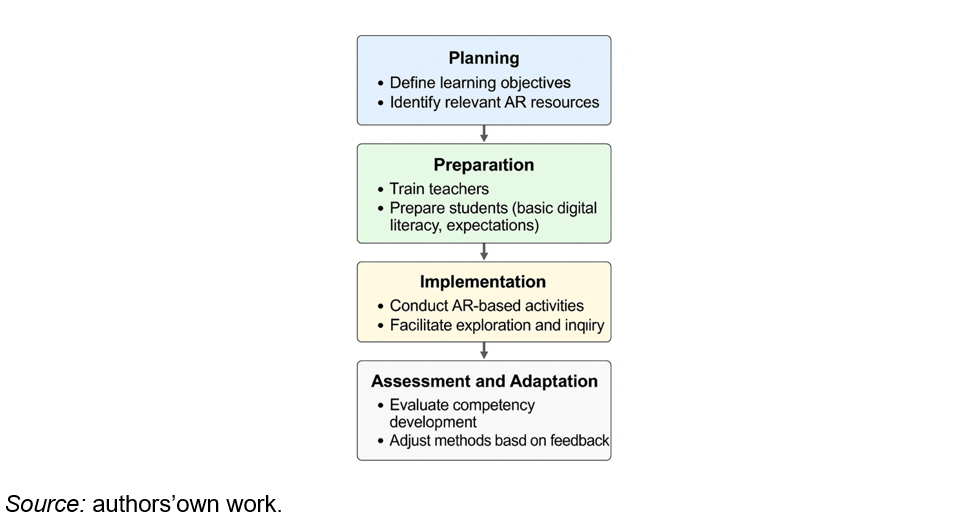
Figure 3. Process of AR Integration in Learning
The figure 3 illustrates a structured process for the effective integration of Augmented Reality (AR) into primary education, highlighting five key stages: Planning, Preparation, Implementation, Reflection, and Assessment and Adaptation. It emphasizes the importance of strategic design, teacher and student readiness, guided experiential learning, and reflective evaluation to ensure meaningful and sustainable educational outcomes.
Table 3. Potential Challenges in AR Integration and Pedagogical Solutions
| Challenge | Description | Possible Solution |
| Limited access to devices | Some students may not have personal smartphones | Organize group work strategies; seek funding for school-owned devices |
| Distraction due to novelty effect | Students focus on AR effects rather than learning content | Define clear tasks and learning objectives during AR activities |
| Technical problems (software glitches, connectivity issues) | Delays, app crashes, or unstable internet during activities | Dow up offline alternative activities as backup |
| Overexposure to AR at the expense of critical thinking | Superficial engagement with content without deeper analysis | Embed structured reflection and discussion sessions after AR experiences |
Source: authors’own work.
This table 3 identifies key challenges in AR integration and proposes strategic pedagogical solutions to enhance implementation effectiveness and promote inclusivity. Table 3 identifies potential challenges associated with the integration of Augmented Reality (AR) into primary education settings and proposes pedagogical solutions to mitigate these obstacles. By systematically addressing issues related to access, engagement, technical reliability, and cognitive depth, the table emphasizes the importance of proactive instructional design. Anticipating and planning for such challenges is critical to ensuring that AR serves as an effective and equitable tool for promoting sustainability competencies.
To strengthen the pedagogical validity and implementation potential of AR in sustainability education, future research should adopt mixed-method and quasi-experimental designs. Such studies could assess how AR-based instruction influences specific competencies such as systems thinking, ethical reflection, and environmentally responsible behavior when compared to traditional teaching methods.
Longitudinal research would be particularly valuable in examining retention, transfer, and behavioral change over time. Furthermore, greater attention should be paid to contextual variables such as teacher readiness, classroom diversity, and institutional infrastructure, which play a critical role in the success or failure of AR integration.
Understanding these factors will not only support the refinement of the three-phase model but also inform scalable implementation strategies that align with broader educational policy goals, particularly in the areas of digital transformation and education for sustainable development. Robust empirical evidence in these areas will be essential to ensure that AR moves beyond innovation for innovation’s sake and contributes meaningfully to equitable, future-oriented education.
The insights derived from this study highlight the transformative potential of Augmented Reality when embedded within a pedagogically robust framework for sustainability education. The integration of AR facilitated deep engagement, conceptual understanding, and real-world relevance critical factors in developing environmental literacy at an early age.
- Тhe alignment between AR tools and the GreenComp framework provided a structured approach to cultivating key sustainability competencies. Students were able to identify complex environmental systems, critically assess human impact, and propose actionable solutions demonstrating a shift from passive content consumption to active, inquiry-based learning.
- Тhe results suggest that AR-enhanced pedagogy supports equity and inclusion. The multimodal nature of AR tools provided diverse entry points for students with varying learning needs, including those with language barriers or attentional challenges. This indicates that, when properly implemented, AR can contribute to narrowing learning gaps and fostering inclusive participation.
- Тhe experience underscored the importance of teacher readiness and professional development. Teachers who received pre-implementation training reported higher confidence and creativity in adapting the AR content to suit their students’ interests and curriculum objectives. This reinforces the idea that educational technology, no matter how powerful, must be mediated through skilled, reflective pedagogy to achieve its full impact.
Furthermore, the case points toward broader systemic implications. At the policy level, integrating AR into national and regional curricula could support strategic goals such as digital transformation, climate education, and innovation in teaching practices. Schools that embrace AR not merely as a tool, but as part of a holistic learning ecosystem, are better positioned to meet the demands of 21st century education.
- Conclusion and summary
Ultimately, Augmented Reality (AR) should not be regarded merely as a digital enhancement, but as a catalyst for pedagogical innovation one that empowers young learners to engage critically with their world and to act with purpose and responsibility from the earliest stages of their education.
This study demonstrates the transformative potential of AR as a pedagogical tool in primary sustainability education. By bridging theory and practice, AR offers not only enriched learning experiences, but also a way to rethink teaching approaches in the context of rapid digitalisation and escalating environmental challenges. The proposed three-phase model comprising contextual preparation, immersive interaction, and reflective application provides a structured and developmentally appropriate framework that fosters systems thinking, emotional engagement, and participatory learning. When aligned with competence-based frameworks such as GreenComp, AR can effectively support the cultivation of sustainability competencies through inclusive and multimodal learning strategies.
However, to fully harness the promise of AR, sustained investment is essential. This includes support for teacher professional development, access to reliable technological infrastructure, and curriculum innovation that embraces both digital and sustainability goals. Without such systemic commitment, the scalability and long-term impact of AR integration will remain limited.
AR represents a powerful opportunity to align education with the values of the 21st century equity, sustainability, and learner agency. Its meaningful integration into the classroom can help prepare students not only to understand the complexities of the modern world but also to shape it with creativity, empathy, and informed action.
Acknowledgements
The work was supported and funded by „Green Deal Awareness through Augmented Reality in Primary School Educatio GreenWithAR“, 2022-1-BG01-KA220-HED-000087414, financed by the Erasmus+ Programme, KA220 – Cooperation Partnerships in Higher EducationN
NOTES
- The case study presented is a fictionalized simulation based on theoretical frameworks and best practices, intended to illustrate potential applications rather than report empirical data.
- (2021).Policy guidance on AI for children. United Nations Children’s Fund. https://www.unicef.org/innocenti/reports/policy-guidance-ai-children.
- (2020).Education for sustainable development: A roadmap.
https://unesdoc.unesco.org/ark:/48223/pf0000374802
REFERENCES
Akçayır, M., Akçayır, G., & Özcan, D. (2023). Teachers’ adoption of augmented reality in education: An updated systematic review. Educational Research Review, 38, 100502. https://doi.org/10.1016/j.edurev.2023.100502.
Avila-Garzón, C., Bacca-Acosta, J., Kinshuk, Duarte, J. & Betancourt, J. (2021). Augmented reality in education: An overview of twenty-five years of research. Contemporary Educational Technology, 13(3), 302. https://doi.org/10.30935/cedtech/10865.
Bacca, J., Baldiris, S., Fabregat, R., Graf, S., & Kinshuk. (2014). Augmented reality trends in education: A systematic review of research and applications. Educational Technology & Society, 17(4), 133 – 149.
Behrendt, M., & Franklin, T. (2014). A review of research on school field trips and their value in education. International Journal of Environmental and Science Education, 9(3), 235 – 245.
Bianchi, G., Pisiotis, U. & Cabrera Giraldez, C. (2022). GreenComp: The European sustainability competence framework. Publications Office of the European Union.
Black, P., & Wiliam, D. (2009). Developing the theory of formative assessment. Educational Assessment, Evaluation and Accountability, 21, 5 – 31.
Bransford, J. D., Brown, A. L. & Cocking, R. R. (Eds.). (2000). How people learn: Brain, mind, experience, and school (Expanded ed.). National Academy Press.
Chi, M. T. H. (2009). Active-constructive-interactive: A conceptual framework for differentiating learning activities. Topics in Cognitive Science, 1(1), 73 – 105.
Cumbley, R., & Church, P. (2013). Is “big data” creepy? Computer Law & Security Review, 29(5), 601 – 609.
Dewey, J. (1938). Experience and education. Macmillan.
Dunleavy, M., & Dede, C. (2014). Augmented reality teaching and learning, In: J. M. Spector et al. (Eds.), Handbook of research on educational communications and technology (pp. 735 – 745). Springer.
Dunleavy, M., Dede, C. & Mitchell, R. (2009). Affordances and limitations of immersive participatory augmented reality simulations for teaching and learning. Journal of Science Education and Technology, 18(1), 7 – 22.
Freire, P. (1970). Pedagogy of the oppressed. Herder and Herder.
Garzón, J., Pavón, J., & Baldiris, S. (2019). Systematic review and meta-analysis of augmented reality in educational settings. Virtual Reality, 23(4), 447 – 459. https://doi.org/10.1007/s10055-019-00379-9.
Gay, G. (2010). Culturally responsive teaching: Theory, research, and practice (2nd ed.). Teachers College Press.
Ibáñez, M. B., & Delgado-Kloos, C. (2020). Augmented reality for STEM learning: A systematic review. Computers & Education, 154, 103878. https://doi.org/10.1016/j.compedu.2020.103878.
Kolb, D. A. (1984). Experiential learning: Experience as the source of learning and development. Prentice Hall.
Lai, K.-W. (2011). Digital technology and the culture of teaching and learning in higher education. Australasian Journal of Educational Technology, 27(8), 1263 – 1275. https://doi.org/10.14742/ajet.892.
Lampropoulos, G. (2024). Teaching and learning natural sciences using augmented reality in preschool and primary education: A literature review. Advances in Mobile Learning Educational Research, 4(1), 1021 – 1037. https://doi.org/10.25082/AMLER.2024.01.013.
Lave, J., & Wenger, E. (1991). Situated learning: Legitimate peripheral participation. Cambridge University Press.
Livingstone, S., Stoilova, M., & Nandagiri, R. (2019). Children’s data and privacy online: Growing up in a digital age – An evidence review. London School of Economics and Political Science.
Marín, V. I. (2022). Augmented reality to enhance collaborative learning: A classroom-based study in primary education. Interactive Learning Environments. https://doi.org/10.1080/10494820.2022.2053437.
Mayer, R. E. (2009). Multimedia learning (2nd ed.). Cambridge University Press.
Peña-Acuña, B. (2024). Ethical approach to the use of immersive technologies: Implications for education. Frontiers in Virtual Reality, 5, 1357595.
https://doi.org/10.3389/frvir.2024.1357595
Piaget, J. (1952). The origins of intelligence in children. International Universities Press.
Rukayah, R., Indriayu, M., Nusantoro, E., & Marini, A. (2021). Needs analysis of natural-science learning media based on STEAM using augmented reality in elementary schools. Proceedings of the 2021 3rd International Conference on Education and Multimedia Technology (pp. 19 – 23). ACM. https://doi.org/10.1145/3516875.3516935.
Rukayah, R., Indriayu, M., Nusantoro, E., & Marini, A. (2021). Needs analysis. Proceedings of the 2021 3rd International Conference on Education and Multimedia Technology, 19 – 23. ACM. https://doi.org/10.1145/3516875.3516935.
Säljö, R. (1999). Learning as the use of tools: A sociocultural perspective on the human–technology link. In: K. Littleton & P. Light (Eds.), Learning with computers: Analysing productive interaction (pp. 144 – 161). Routledge.
Siemens, G. (2005). Connectivism: A learning theory for the digital age. International Journal of Instructional Technology and Distance Learning, 2(1), 3 – 10.
Sobel, D. (2004). Place-based education: Connecting classrooms and communities. Orion Society.
Southgate, E., Smith, S. P., & Cheers, H. (2018). Embedding immersive virtual reality in classrooms: Ethical, organisational and educational lessons in bridging research and practice. Australasian Journal of Educational Technology, 34(6), 1 – 16, https://doi.org/10.1016/j.ijcci.2018.10.002.
Sumardi, S., Rohman, A., & Wahyudiati, D. (2020). Does the teaching and learning process in primary schools correspond to the characteristics of 21st century learning? Australasian Journal of Educational Technology, 36(1), 1 – 14. https://doi.org/10.14742/ajet.838
Tilbury, D., & Wortman, D. (2004). Engaging people in sustainability. IUCN.
Volioti, C., Rizopoulos, D., & Avouris, N. (2023). An augmented reality mathematics app to enhance motivation and conceptual understanding in primary school students. Computers, 12(10), 207. https://doi.org/10.3390/computers12100207.
Vygotsky, L. S. (1978). Mind in society: The development of higher psychological processes. Harvard University Press.
Winn, W., & Snyder, D. (1996). Cognitive perspectives in psychology. In: D. H. Jonassen (Ed.), Handbook for research for educational communications technology (pp. 112 – 142). Simon & Schuster Macmillan.
Wu, H.-K., Lee, S. W.-Y., Chang, H.-Y., & Liang, J.-C. (2013). Current status, opportunities and challenges of augmented reality in education. Computers & Education, 62, 4149.
https://doi.org/10.1016/j.compedu.2012.10.024.
Prof. Dr. Albena Vutsova
ORCID iD: 0000-0001-8223-67
WoS Researcher ID: AAC-2142-2020
Dr. Olga Ignatova
ORCID iD: 0009-0005-6958-1135
WoS Researcher ID: JZT-9456-2024
Sofia University „St. Kliment Ohridski”
Faculty of Economics and Business Administration
Sofia, Bulgaria
E-mail: avutsova@yahoo.com
E-mail: o.ignatova@feb.uni-sofia.bg
Mrs. Ieva Tenberga
ORCID iD: 0009-0008-6461-514X
University of Latvia
Faculty of Education Sciences and Psychology
Riga, Latvia
E-mail: ieva.tenberga@gmail.com
Prof. Dr. Hasan Arslan
ORCID iD: 0000-0002-8011-3069
WoS Researcher ID: NHR-0853-2025
Department of Educational Administration and Supervision
Faculty of Education
Canakkale Onsekiz Mart University
Canakkale, Turkey
E-mail: arslan.phd@gmail.com
>> Изтеглете статията в PDF <<

Свързани статии:
 Възможности за интегриране на добавена реалност като образователен инструмент в класната стая
Vision of Digital Competences of Primary School Students and Teachers in Bulgaria in Educational Documentation of All School Subjects
Possibilities for the Application of Artificial Intelligence Systems in the Education of Students of Pedagogical Specialties
The Pythagorean Tree with Geogebra as a Motivator for the Implementation of Augmented Reality in School
Възможности за интегриране на добавена реалност като образователен инструмент в класната стая
Vision of Digital Competences of Primary School Students and Teachers in Bulgaria in Educational Documentation of All School Subjects
Possibilities for the Application of Artificial Intelligence Systems in the Education of Students of Pedagogical Specialties
The Pythagorean Tree with Geogebra as a Motivator for the Implementation of Augmented Reality in School